English
- English
- Español
- Português
- русский
- Français
- 日本語
- Deutsch
- tiếng Việt
- Italiano
- Nederlands
- ภาษาไทย
- Polski
- 한국어
- Svenska
- magyar
- Malay
- বাংলা ভাষার
- Dansk
- Suomi
- हिन्दी
- Pilipino
- Türkçe
- Gaeilge
- العربية
- Indonesia
- Norsk
- تمل
- český
- ελληνικά
- український
- Javanese
- فارسی
- தமிழ்
- తెలుగు
- नेपाली
- Burmese
- български
- ລາວ
- Latine
- Қазақша
- Euskal
- Azərbaycan
- Slovenský jazyk
- Македонски
- Lietuvos
- Eesti Keel
- Română
- Slovenski
- मराठी
- Srpski језик

What Makes Tubular Pump Selection So Critical for High-Flow Water Projects?
Article Summary: A Tubular Pump is often selected when a project needs to move a large volume of water through a low-head system with stable flow, lower hydraulic loss, and a compact pumping station layout. This article explains why choosing the right tubular pump matters, what problems buyers commonly face, how the pump structure affects long-term performance, and what details should be reviewed before procurement. For irrigation, drainage, flood control, river diversion, municipal water management, and pumping station projects, a well-matched tubular pump can reduce construction complexity, improve operating efficiency, and support dependable continuous service.
Table of Contents
- Why does a Tubular Pump matter in low-head water transfer?
- How does a Tubular Pump solve common project pain points?
- Which working conditions should buyers check before selection?
- How does structure influence efficiency and installation cost?
- Which applications are suitable for a Tubular Pump?
- How should buyers compare Tubular Pump options?
- Why work with Tianjin Kairun Pump Industry Co., Ltd.?
- FAQ
- Conclusion
Outline:
- Explain the role of tubular pumps in high-flow, low-head systems.
- Identify buyer concerns such as efficiency, installation space, civil engineering cost, flow stability, and long-term maintenance.
- Compare major selection factors including flow rate, head, installation angle, materials, motor configuration, and control system compatibility.
- Show where tubular pumps are commonly used in water conservancy, municipal drainage, irrigation, and flood control projects.
- Provide a practical procurement checklist and FAQ for project decision-makers.
Why does a Tubular Pump matter in low-head water transfer?
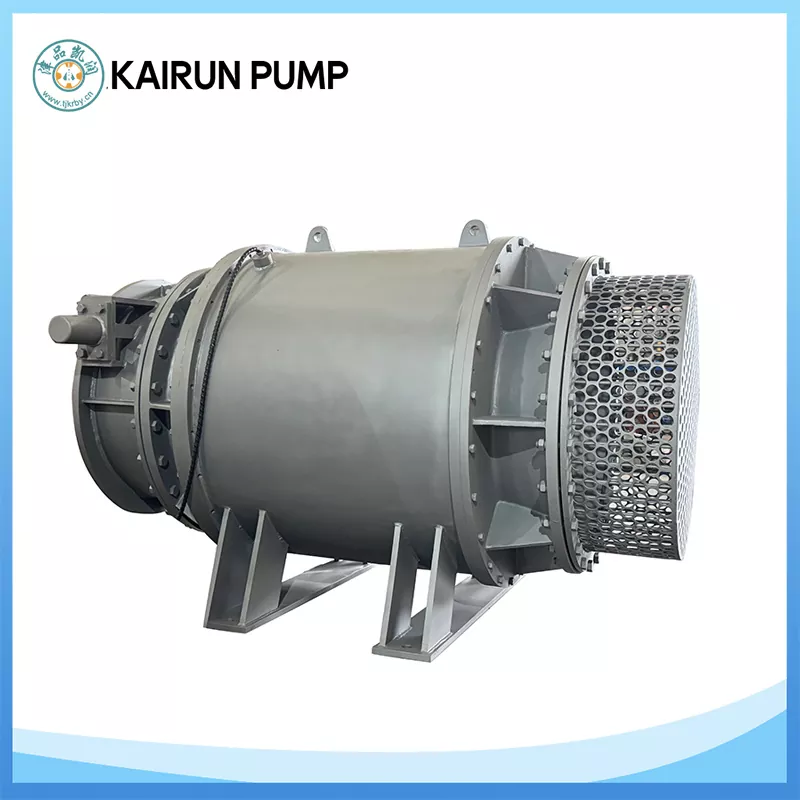
In many water transfer projects, the challenge is not always lifting water to a very high elevation. More often, the real challenge is moving a very large volume of water steadily, efficiently, and safely across a short or moderate head difference. This is where a Tubular Pump becomes highly valuable.
A tubular pump is designed around an axial-flow concept. Instead of forcing water through a complicated turning path, the pump allows water to move along a relatively direct flow channel. The pump body can be integrated with the pipeline direction, which helps reduce unnecessary turbulence and energy loss. For projects where every percentage of operating efficiency matters, this design is not a small detail. It can affect electricity consumption, station layout, construction budget, operating stability, and maintenance planning.
For buyers, the decision is rarely just about buying a pump. It is about protecting the whole project from common failures: unstable discharge, oversized civil structures, excessive power consumption, backflow risk, noise, vibration, and difficult maintenance. A suitable Tubular Pump gives engineers a more compact and practical way to handle large-flow water movement while keeping the hydraulic path smooth.
How does a Tubular Pump solve common project pain points?
Project owners often face pressure from several sides at once. The system must move enough water, meet the required operating schedule, stay within the construction budget, and remain reliable during long operating periods. A poorly selected pump may still run, but it can create hidden problems that become expensive later.
The first pain point is energy loss. In low-head systems, hydraulic loss can consume a large part of the available head. If the flow channel is not smooth, the pump may waste energy simply overcoming internal resistance. A Tubular Pump is useful because its straight or near-straight flow arrangement can reduce avoidable loss and improve the overall movement of water through the system.
The second pain point is installation space. Traditional pumping station layouts may require more complex civil structures, additional elbows, larger foundations, or deeper installation pits. Because tubular pumps can be arranged horizontally or at an inclined angle depending on project needs, they may help simplify the station structure and reduce unnecessary layout complexity.
The third pain point is continuous operation. Drainage, irrigation, flood control, and water diversion projects may need pumps to work for long periods under demanding conditions. Buyers need stable rotation, reliable sealing, proper motor protection, and materials suitable for the water environment. A tubular pump designed for the correct operating point can support stable discharge with less vibration and more predictable performance.
- For contractors: a compact pump layout can simplify installation planning.
- For municipal projects: stable large-flow drainage can help reduce waterlogging risk.
- For irrigation systems: efficient water delivery can support wide-area farmland supply.
- For pumping stations: lower hydraulic loss can improve long-term operating economics.
- For maintenance teams: a suitable structure can make inspection and service more manageable.
Which working conditions should buyers check before selection?
A Tubular Pump should never be selected by product name alone. Two projects may both require high-flow water transfer, but their pump requirements can be very different. Before choosing a model, buyers should define the actual hydraulic and site conditions as clearly as possible.
| Selection Factor | Why It Matters | What Buyers Should Confirm |
|---|---|---|
| Flow Rate | The pump must deliver the required water volume without operating far from its efficient range. | Design flow, peak flow, seasonal flow changes, and future expansion needs. |
| Total Head | Low-head projects are sensitive to hydraulic loss, so accurate head calculation is essential. | Static head, pipeline loss, inlet and outlet conditions, and safety margin. |
| Water Quality | Sediment, debris, corrosion, and salinity can influence material choice and service life. | Clean water, river water, seawater exposure, suspended solids, and corrosion risk. |
| Installation Method | The pump arrangement affects civil engineering, maintenance access, and station footprint. | Horizontal installation, inclined installation, pump station size, and pipeline direction. |
| Operating Schedule | Continuous operation requires stronger attention to motor reliability, sealing, and cooling. | Daily operating hours, standby requirements, emergency operation, and duty cycle. |
| Control Requirements | Modern pumping stations often need coordinated control and monitoring. | Control cabinet, valve control, water level signals, remote monitoring, and protection functions. |
When these details are not confirmed, the project may suffer from mismatched performance. An oversized pump can increase procurement and power costs. An undersized pump may fail to meet drainage or irrigation targets. A pump selected without considering water quality may face premature wear or corrosion. Proper selection is the first layer of risk control.
How does structure influence efficiency and installation cost?
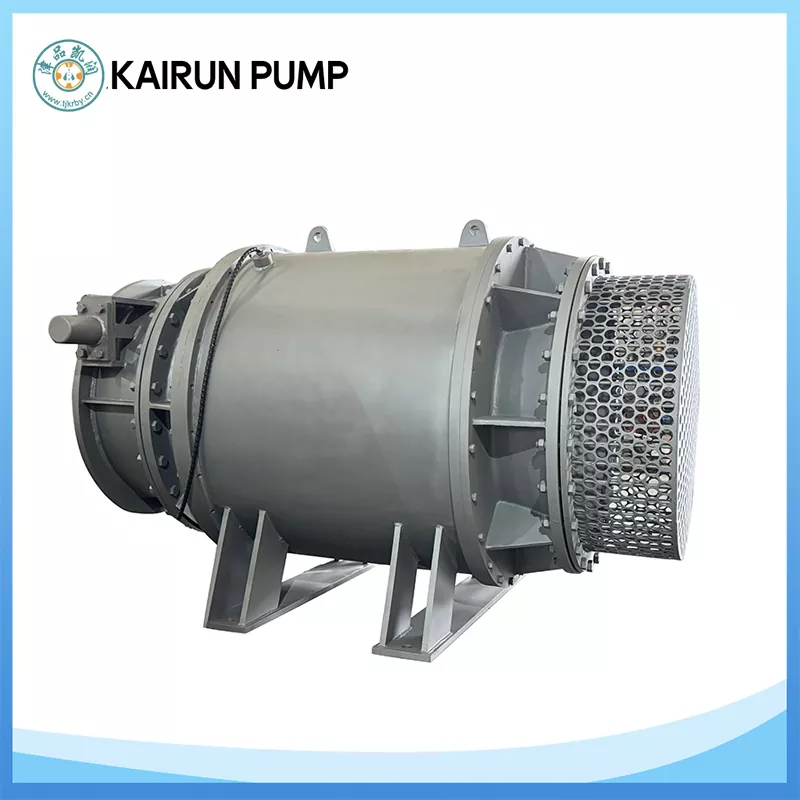
The structure of a Tubular Pump is one of its strongest advantages. In many designs, the pump and motor arrangement follows the direction of the flow channel, allowing the pump to become part of the water conveyance system rather than a separate unit that requires complicated redirection of flow.
This matters because water does not like sharp turns. Every unnecessary bend, sudden expansion, contraction, or poorly designed transition can create turbulence. Turbulence leads to hydraulic loss, vibration, noise, and uneven pressure distribution. In a large-flow project, even a small percentage of loss can become significant when multiplied over long operating hours.
A compact tubular arrangement can also reduce the burden on civil works. When the pump station design is simplified, contractors may save space, reduce structural complexity, and create a more direct inlet and outlet path. This does not mean every project will have the same savings, but it does mean the pump selection can influence more than the equipment budget. It can influence the whole station design.
Practical reminder: When evaluating a tubular pump proposal, buyers should not only compare pump price. They should also compare expected energy consumption, installation layout, maintenance access, foundation requirements, control system compatibility, and long-term operating stability.
For projects that must operate during rainy seasons, irrigation cycles, flood control periods, or emergency drainage events, structure and reliability are inseparable. A pump that is easy to install but difficult to maintain may create future problems. A pump with good hydraulic design but poor material suitability may not last in harsh water conditions. The best result comes from matching pump structure, materials, motor configuration, and project environment together.
Which applications are suitable for a Tubular Pump?
A Tubular Pump is commonly used where high flow and low head are the main operating requirements. Its value becomes clear in projects that need fast, stable, and energy-conscious water movement.
| Application | Typical Buyer Concern | How a Tubular Pump Helps |
|---|---|---|
| Agricultural Irrigation | Large-area water supply with stable seasonal operation. | Moves high volumes of water efficiently for farmland and canal systems. |
| Municipal Drainage | Rapid discharge during heavy rainfall or urban waterlogging. | Supports high-flow drainage with a compact pumping station layout. |
| Flood Control | Dependable emergency operation under high water pressure and strict timing. | Provides strong flow capacity for flood prevention and water level regulation. |
| River Diversion | Continuous water transfer with reduced hydraulic loss. | Uses a smooth axial-flow channel to maintain efficient conveyance. |
| Coastal Pumping Stations | Corrosion resistance, sealing reliability, and stable large-flow operation. | Can be configured with suitable materials and protection for demanding environments. |
| Water Conservancy Projects | Long-term reliability, system integration, and project-specific customization. | Works as part of a complete pumping system for controlled water management. |
Because these applications often involve public infrastructure or large agricultural systems, pump failure can cause more than downtime. It can delay irrigation schedules, increase flood risk, interrupt drainage plans, or create unplanned maintenance costs. That is why the selection process should be handled with technical discipline rather than quick price comparison.
How should buyers compare Tubular Pump options?
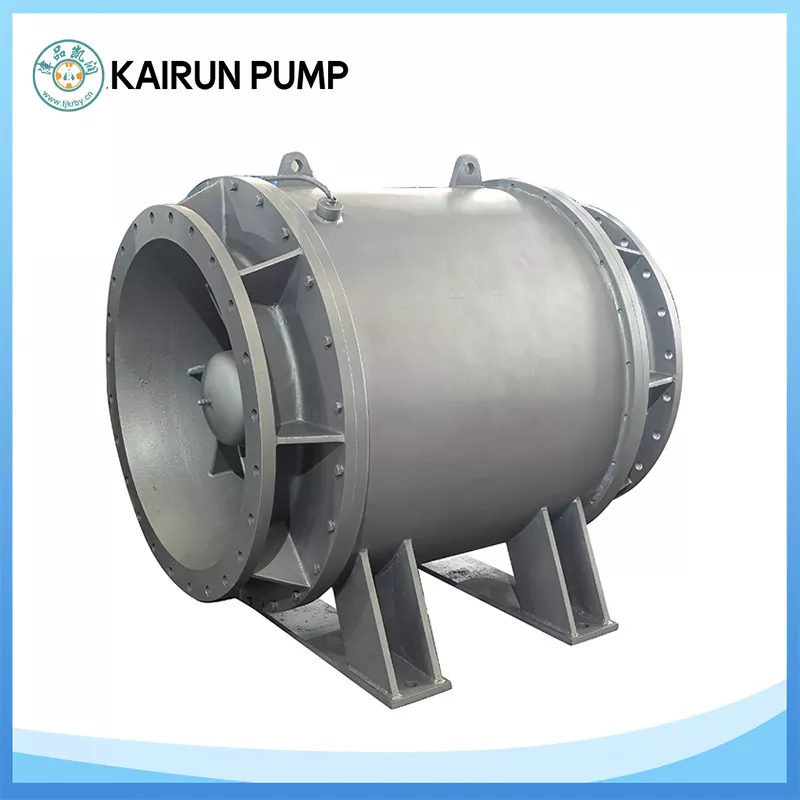
Buyers often receive several quotations that look similar on the surface. The model names may be close, the flow range may appear acceptable, and the price difference may seem like the easiest factor to judge. But a Tubular Pump should be compared through the complete operating picture.
A useful comparison should include the following points:
- Hydraulic performance: Check whether the pump operates close to the required flow and head point.
- Efficiency curve: Review whether the pump maintains good efficiency under realistic operating conditions.
- Material configuration: Match pump materials with clean water, sediment, corrosive water, or coastal conditions.
- Motor reliability: Confirm motor protection, cooling design, insulation level, and long-term operating suitability.
- Sealing design: Evaluate sealing performance for the installation environment and maintenance cycle.
- Installation layout: Confirm whether the pump supports the required horizontal or inclined arrangement.
- Testing capability: Ask whether the manufacturer can provide factory testing and performance verification.
- Project support: Consider whether the supplier can assist with model selection, system configuration, and after-sales communication.
For many buyers, the biggest mistake is choosing a pump only by the rated flow. Flow is important, but it is not enough. The system head, pipeline design, inlet condition, operation hours, water quality, and control strategy all influence whether the pump will perform well after installation.
A reliable supplier should be able to discuss these details clearly. If a quotation does not explain why a particular tubular pump model is suitable for the project, the buyer should ask for more technical support before making a decision.
Why work with Tianjin Kairun Pump Industry Co., Ltd.?
Tianjin Kairun Pump Industry Co., Ltd. provides pumping solutions for water conservancy, agriculture, municipal engineering, and industrial water management projects. For buyers evaluating a Tubular Pump, the value of working with an experienced pump manufacturer is not limited to product supply. It also includes project communication, model selection, production control, testing support, and system matching.
In practical projects, buyers may need more than a single pump unit. They may also require valves, pipe fittings, control cabinets, accessories, or a coordinated pumping solution. A supplier with broader pump system knowledge can help reduce communication gaps between equipment selection and field installation.
For contractors and project owners, this matters because pumping systems are rarely isolated. The pump must work with the inlet structure, outlet pipeline, gate system, electrical control, water level monitoring, and maintenance plan. When these details are considered together, the project has a better chance of reaching stable operation after commissioning.
A well-selected tubular pump can support high-flow water movement, but a well-supported project can do more: it can reduce installation uncertainty, avoid unnecessary redesign, and improve confidence before delivery.
FAQ
Q1: What is a Tubular Pump mainly used for?
A Tubular Pump is mainly used for large-flow, low-head water transfer. Common applications include agricultural irrigation, river diversion, municipal drainage, flood control, coastal pumping stations, and water conservancy projects.
Q2: Is a Tubular Pump different from a vertical axial flow pump?
Yes. Both can be used for high-flow applications, but their installation structures are different. A tubular pump is often arranged along the pipeline direction, either horizontally or at an inclined angle, which can reduce flow turning and simplify certain station layouts.
Q3: Do all low-head projects need a Tubular Pump?
Not always. The correct pump depends on flow rate, head, installation space, water quality, civil structure, operating schedule, and maintenance requirements. A tubular pump is especially suitable when large water volume, smooth flow, and compact layout are important.
Q4: How can buyers avoid choosing the wrong model?
Buyers should provide complete working conditions, including flow, head, water quality, installation method, operating hours, control requirements, and site limitations. The more accurate the project data, the more reliable the selection result will be.
Q5: Can a Tubular Pump be customized?
Many tubular pump projects require customization based on site layout, hydraulic conditions, materials, motor requirements, and control system needs. Buyers should discuss project-specific requirements with the manufacturer before finalizing the selection.
Q6: Why is efficiency so important for a Tubular Pump?
High-flow pumps often operate for long hours. Even a small efficiency difference can affect electricity consumption over time. A suitable tubular pump can help reduce hydraulic loss and support more economical long-term operation.
Conclusion
Choosing a Tubular Pump is a technical decision that affects much more than equipment purchase. It influences hydraulic performance, civil construction, operating cost, maintenance planning, and long-term project reliability. For high-flow, low-head water projects, the right pump can help create a smoother flow path, reduce unnecessary energy loss, and support stable water movement in demanding applications.
Buyers should look beyond the product name and compare the complete solution: flow rate, head, water quality, installation method, materials, motor performance, control compatibility, and supplier support. When these details are handled carefully, a tubular pump can become a dependable part of irrigation, drainage, flood control, river diversion, and municipal water management systems.
Ready to discuss your Tubular Pump project?
If your project requires high-flow, low-head water transfer, Tianjin Kairun Pump Industry Co., Ltd. can help you review working conditions, select a suitable Tubular Pump, and build a practical pumping solution for your application. For model selection, technical consultation, or a customized quotation, please contact us today and share your project requirements.
Related News
- Sluice Gate Axial Flow Pumps Gain Attention as Cities Upgrade Flood Control and Drainage Systems
- What Makes Vertical Axial Flow Pump the Right Choice for High-Flow Water Projects?
- How Can a Motor Control Center Solve Pump System Downtime and Energy Waste?
- How Can Water Pump Control Valve Prevent Costly Pump System Failures?
- How Can Water Pump Accessories Reduce Pump Downtime?
- What Makes a Submersible Pump the Better Choice for Demanding Water Projects?
Leave me a message