English
- English
- Español
- Português
- русский
- Français
- 日本語
- Deutsch
- tiếng Việt
- Italiano
- Nederlands
- ภาษาไทย
- Polski
- 한국어
- Svenska
- magyar
- Malay
- বাংলা ভাষার
- Dansk
- Suomi
- हिन्दी
- Pilipino
- Türkçe
- Gaeilge
- العربية
- Indonesia
- Norsk
- تمل
- český
- ελληνικά
- український
- Javanese
- فارسی
- தமிழ்
- తెలుగు
- नेपाली
- Burmese
- български
- ລາວ
- Latine
- Қазақша
- Euskal
- Azərbaycan
- Slovenský jazyk
- Македонски
- Lietuvos
- Eesti Keel
- Română
- Slovenski
- मराठी
- Srpski језик

How Can a Motor Control Center Solve Pump System Downtime and Energy Waste?
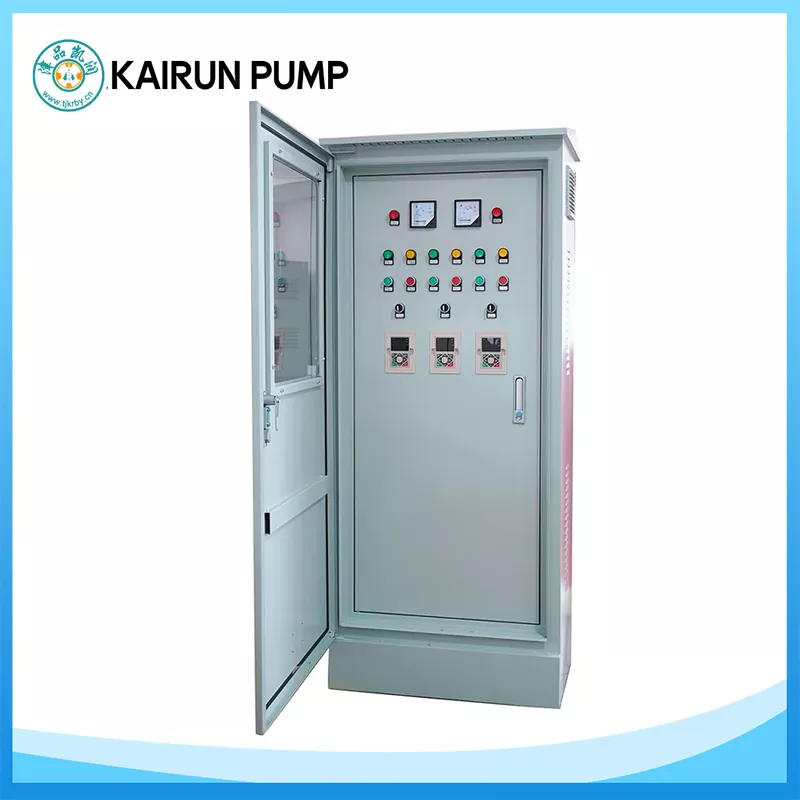
Article Summary: A Motor Control Center is more than an electrical cabinet. For pump stations, irrigation systems, municipal drainage projects, industrial water circulation, and mining water management, it can decide whether motors start smoothly, pumps run safely, energy is used wisely, and operators can respond before small faults become expensive shutdowns. This article explains how a well-designed Motor Control Center helps solve common pain points such as high starting current, unstable pressure, motor overheating, frequent manual operation, poor fault protection, and rising maintenance costs. It also offers practical selection advice for buyers who need a reliable pump control solution from an experienced manufacturer such as Tianjin Kairun Pump Industry Co., Ltd.
Table of Contents
- 1. Why Does Pump Downtime Often Start from Poor Motor Control?
- 2. How Does a Motor Control Center Improve Starting Stability?
- 3. How Can Variable Frequency Control Reduce Energy Waste?
- 4. Which Protection Functions Matter Most in Pump Applications?
- 5. How Should Buyers Choose the Right Motor Control Center?
- 6. What Applications Benefit Most from Integrated Pump Control?
- 7. How Does Kairun Support Custom Pump Control Projects?
- 8. FAQ
- 9. Conclusion
Why Does Pump Downtime Often Start from Poor Motor Control?
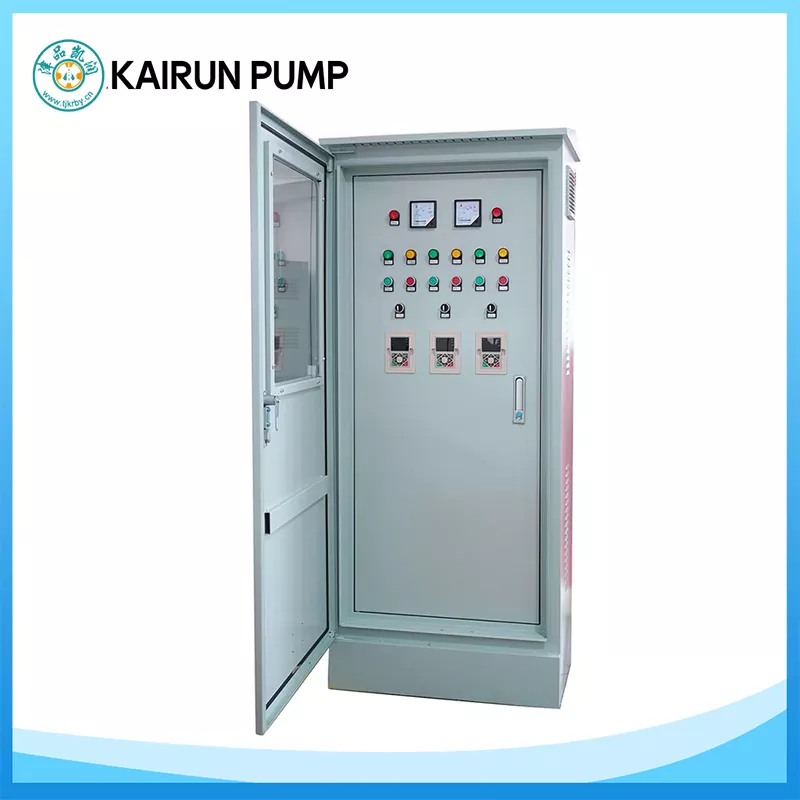
Many pump failures are blamed on the pump itself, but the real cause often begins in the electrical control system. A pump may be mechanically sound, yet still suffer from repeated trips, unstable operation, excessive vibration, overheating, or short motor life because the starting method, protection logic, or control cabinet design is not matched to the working conditions.
In real projects, pump operators usually care about a few direct questions: Why does the motor trip during startup? Why does pressure fluctuate after the pump starts? Why is the electricity bill so high even when the flow demand changes throughout the day? Why does one fault stop the whole station? These problems are not small inconveniences. In municipal water supply, drainage stations, irrigation systems, industrial cooling circulation, and mining operations, one unexpected shutdown can delay production, affect public service, or create safety risks.
A properly designed Motor Control Center helps bring these risks under control. It centralizes motor starting, speed regulation, protection, monitoring, and operation logic into one coordinated system. Instead of relying on scattered electrical components or manual switching, the operator gains a structured control platform that can start motors smoothly, protect equipment automatically, and adapt operation to actual site demand.
For pump systems, good motor control is not only about turning equipment on and off. It is about protecting the motor, stabilizing the process, reducing energy loss, and making the whole pumping station easier to manage.
How Does a Motor Control Center Improve Starting Stability?
Motor starting is one of the most stressful moments in a pump system. If the starting method is too aggressive, the motor may draw a very high inrush current, causing voltage dips, mechanical shock, pipe vibration, and unnecessary stress on couplings, bearings, valves, and pipelines. For larger pumps, repeated hard starts can shorten the service life of both the motor and the connected hydraulic equipment.
A Motor Control Center can use different starting methods according to the motor size, load type, site power conditions, and control requirements. Common options include star-delta starting, soft starter control, and variable frequency drive control. Each method has its own suitable use case, and the correct choice depends on whether the project prioritizes lower investment, smoother starting, speed adjustment, energy saving, or automation.
| Starting Method | Main Advantage | Suitable Pump Scenario | Buyer Concern It Solves |
|---|---|---|---|
| Star-Delta Starter | Reduces starting current compared with direct starting | Stable-load pump systems with moderate control requirements | Lower starting impact and cost-effective motor protection |
| Soft Starter Panel | Provides smooth acceleration and deceleration | Pumps that need reduced mechanical shock during startup and stop | Less vibration, less water hammer, and longer equipment life |
| Variable Frequency Drive Panel | Controls motor speed based on actual demand | Water supply, pressure control, circulation, and variable-flow projects | Energy saving, stable pressure, and flexible operation |
The value of a Motor Control Center is not only in using these components, but in integrating them properly. Component quality, cabinet layout, wiring design, heat dissipation, protection coordination, and field operation convenience all affect long-term reliability. When buyers focus only on the cabinet price and ignore engineering design, the system may appear cheaper at first but become more expensive through downtime, troubleshooting, and premature component replacement.
How Can Variable Frequency Control Reduce Energy Waste?
Energy waste is one of the biggest hidden costs in pump operation. Many pumps are selected for peak demand, but actual operating demand often changes throughout the day or across seasons. If the motor runs at full speed even when the system only needs partial flow, energy is wasted and the pump may operate away from its efficient working range.
A Motor Control Center with variable frequency drive technology can adjust motor speed to match real flow or pressure demand. For example, in a municipal water supply system, demand may rise in the morning and evening but fall during low-use periods. In irrigation projects, water demand may change by crop stage, weather, or field area. In industrial circulation systems, cooling or process demand may vary with production load. Instead of using throttling valves or repeated manual operation, the control system can regulate motor speed more precisely.
This creates several practical benefits:
- Lower electricity consumption: The motor does not need to run at full speed when demand is low.
- More stable pressure: The system can reduce sudden pressure changes caused by manual switching or fixed-speed operation.
- Reduced mechanical wear: Smooth speed adjustment lowers stress on pumps, valves, and pipelines.
- Better process control: Operators can maintain target flow, pressure, or water level more consistently.
- Improved operational visibility: Running status, fault signals, and control parameters can be easier to monitor.
For buyers, the key point is not simply whether a control cabinet contains a frequency inverter. The real question is whether the Motor Control Center is designed around the whole pump system. The drive capacity, control logic, sensor feedback, overload setting, enclosure protection, ventilation, and remote operation requirements must be considered together.
Which Protection Functions Matter Most in Pump Applications?
Pumps usually work in demanding environments. Some operate outdoors. Some handle sewage or river water. Some work in remote irrigation or mining areas where maintenance teams cannot arrive quickly. A reliable Motor Control Center should therefore include practical protection functions that help prevent faults from becoming major failures.
| Protection Function | Why It Matters | Typical Pain Point |
|---|---|---|
| Overload Protection | Helps prevent motor damage caused by excessive current | Motor overheating or winding failure |
| Phase Loss Protection | Stops unsafe operation when one phase is missing | Unbalanced current and motor burnout |
| Short Circuit Protection | Reduces electrical safety risk during serious faults | Equipment damage and safety hazards |
| Dry-Run Protection | Prevents the pump from running without enough water | Seal damage, overheating, and pump wear |
| Overvoltage and Undervoltage Protection | Protects equipment under unstable power supply conditions | Frequent trips or component failure |
| Automatic Start and Stop Logic | Allows operation based on water level, pressure, or system demand | Heavy manual workload and delayed response |
Protection should be easy to understand and maintain. A cabinet with too little protection creates risk, but a cabinet with confusing settings can also cause problems. Operators need clear indication, logical wiring, accessible components, and a control interface that supports daily use. For many project owners, the best Motor Control Center is not the most complicated one; it is the one that matches the site and keeps the pump system stable with minimum unnecessary intervention.
How Should Buyers Choose the Right Motor Control Center?
Choosing a Motor Control Center should begin with the pump system, not with the cabinet alone. Before confirming a solution, buyers should clarify the motor power, voltage, number of pumps, starting frequency, working environment, control mode, protection needs, and future expansion plan.
A practical selection process may include the following points:
- Confirm the motor data: Rated power, voltage, current, starting requirements, and duty cycle should be checked first.
- Understand the hydraulic demand: Flow, head, pressure stability, and water level changes affect the control method.
- Choose the starting mode: Star-delta, soft starter, or variable frequency drive should be selected according to operational needs.
- Check the installation environment: Temperature, humidity, dust, corrosion, outdoor exposure, and cabinet protection level must be considered.
- Plan the control interface: Local control, remote control, automatic control, manual backup, and alarm indication should be defined clearly.
- Consider maintenance access: Internal layout should allow inspection, wiring checks, component replacement, and troubleshooting.
- Review future expansion: If more pumps may be added later, the cabinet design should leave room for system growth.
Buyers who manage public infrastructure or industrial sites often need more than a standard cabinet. They need a supplier who understands how electrical control interacts with pump performance. This is where Tianjin Kairun Pump Industry Co., Ltd. can provide value by connecting pump selection, control system design, and project application experience into one practical solution.
What Applications Benefit Most from Integrated Pump Control?
A Motor Control Center is widely used wherever motors drive pumps, fans, or similar rotating equipment. In pump projects, its value becomes especially clear when stable operation, remote management, energy saving, and equipment protection are important.
| Application | Common Challenge | How Motor Control Helps |
|---|---|---|
| Municipal Water Supply | Changing demand and pressure fluctuation | Maintains stable pressure and supports automatic operation |
| Drainage Pump Stations | Sudden water level rise and emergency startup | Supports automatic start-stop and multi-pump coordination |
| Agricultural Irrigation | Seasonal operation and remote site management | Reduces manual workload and improves operating efficiency |
| Industrial Circulation | Long running hours and high energy cost | Adjusts motor speed according to process demand |
| Mining and Construction Dewatering | Harsh working conditions and high reliability demand | Improves protection against overload, phase loss, and abnormal operation |
| River and Seawater Pumping | Large flow requirements and heavy-duty operation | Supports stable motor starting and coordinated pump control |
In these applications, the Motor Control Center becomes the operational bridge between electrical power and hydraulic performance. It helps the pump respond to real working conditions instead of forcing the whole system to run in a fixed and inefficient way.
How Does Kairun Support Custom Pump Control Projects?
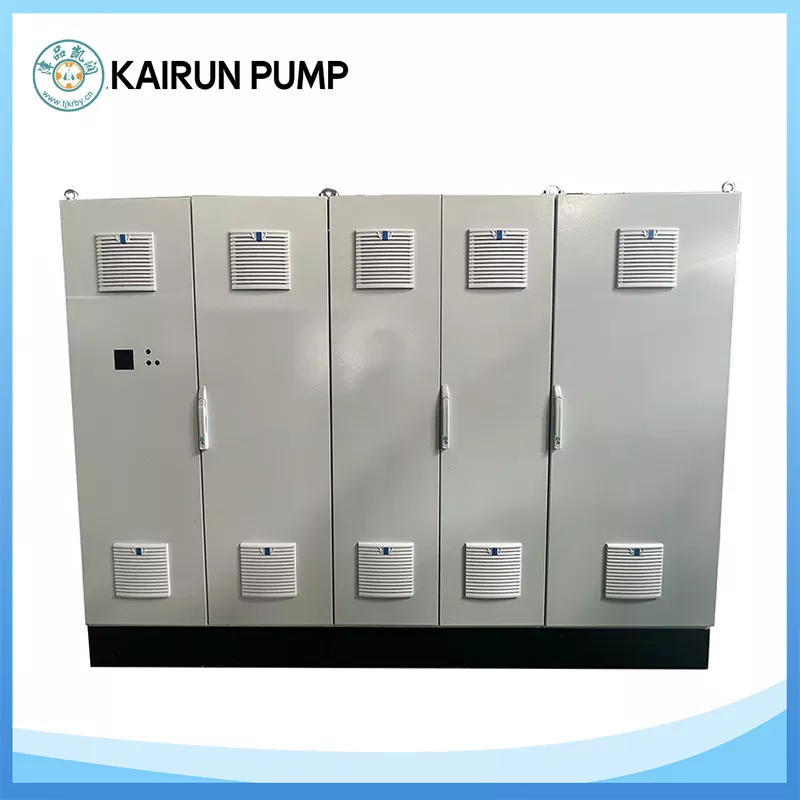
Tianjin Kairun Pump Industry Co., Ltd. focuses on pump products and related control solutions for water supply, drainage, irrigation, municipal engineering, industrial applications, and other demanding projects. For buyers who need a Motor Control Center, the advantage of working with a pump-oriented manufacturer is that the control cabinet can be designed with the pump application in mind.
A control system should not be separated from the equipment it manages. For example, a submersible pump, axial flow pump, sewage pump, centrifugal pump, and large drainage pump station may require different starting logic, alarm settings, cable considerations, sensor feedback, and operating modes. Kairun can help buyers review these project details and choose a control solution that supports stable pump operation instead of simply supplying an electrical box.
Depending on project needs, a Motor Control Center can be configured with:
- Star-delta starting control for suitable fixed-speed motor applications
- Soft starter control for smoother startup and reduced mechanical shock
- Variable frequency drive control for pressure regulation, flow adjustment, and energy saving
- Automatic start-stop logic based on water level, pressure, or operating signals
- Multiple electrical protection functions for safer long-term operation
- Local and remote control options depending on project management needs
- Customized cabinet layout for installation, inspection, and maintenance convenience
This project-based approach helps buyers reduce uncertainty before purchase. Instead of guessing whether a standard cabinet will fit the job site, buyers can discuss working conditions, pump parameters, control requirements, and protection needs before confirming the final configuration.
FAQ
Q1: What is a Motor Control Center used for in pump systems?
A Motor Control Center is used to start, stop, protect, regulate, and monitor motors that drive pumps. In pump systems, it helps improve starting stability, reduce electrical and mechanical stress, protect the motor from abnormal conditions, and support automatic or remote operation.
Q2: Is a variable frequency drive always necessary?
Not always. If the pump runs under stable conditions and does not need speed adjustment, a star-delta starter or soft starter may be suitable. However, if the project requires pressure control, flow adjustment, energy saving, or frequent demand changes, a variable frequency drive panel can be a better choice.
Q3: Can a Motor Control Center reduce pump maintenance costs?
Yes. By reducing starting shock, preventing overload, protecting against phase loss, supporting dry-run protection, and stabilizing operation, a properly designed Motor Control Center can reduce unnecessary wear and help avoid expensive emergency repairs.
Q4: What information should I provide before ordering?
Buyers should provide motor power, voltage, current, number of pumps, working environment, starting method preference, control mode, protection requirements, and project application. If available, pump model, flow, head, and site operation details are also useful.
Q5: Can the control cabinet be customized for different pump types?
Yes. Different pump types and project environments may require different electrical configurations, protection logic, cabinet structures, and control modes. Customization is often recommended for municipal, industrial, irrigation, and large pump station projects.
Q6: Why should buyers consider Tianjin Kairun Pump Industry Co., Ltd.?
Tianjin Kairun Pump Industry Co., Ltd. understands both pump equipment and control requirements. This helps buyers obtain a more practical Motor Control Center solution for water supply, drainage, irrigation, industrial circulation, and other pump-related applications.
Conclusion
A Motor Control Center can solve many problems that pump users face every day: hard starting, unstable pressure, high energy consumption, poor protection, frequent manual operation, and unexpected downtime. When designed correctly, it becomes a central part of a safer, smarter, and more efficient pump system.
For buyers, the best choice is not simply the cheapest control cabinet. The better choice is a system that fits the motor, pump, application, environment, and long-term operating plan. Whether the project needs a star-delta control panel, a soft starter panel, a variable frequency drive panel, or a customized integrated pump control solution, the design should always serve the actual working conditions.
Need a Motor Control Center for Your Pump Project?
If you are planning a water supply project, drainage pump station, irrigation system, industrial circulation line, or customized pump control application, Tianjin Kairun Pump Industry Co., Ltd. can help you evaluate the right configuration for your site. Share your motor data, pump parameters, and operating requirements with our team, and contact us today to discuss a reliable Motor Control Center solution built for long-term performance.
Related News
- Sluice Gate Axial Flow Pumps Gain Attention as Cities Upgrade Flood Control and Drainage Systems
- What Makes Tubular Pump Selection So Critical for High-Flow Water Projects?
- What Makes Vertical Axial Flow Pump the Right Choice for High-Flow Water Projects?
- How Can Water Pump Control Valve Prevent Costly Pump System Failures?
- How Can Water Pump Accessories Reduce Pump Downtime?
- What Makes a Submersible Pump the Better Choice for Demanding Water Projects?
Leave me a message