English
- English
- Español
- Português
- русский
- Français
- 日本語
- Deutsch
- tiếng Việt
- Italiano
- Nederlands
- ภาษาไทย
- Polski
- 한국어
- Svenska
- magyar
- Malay
- বাংলা ভাষার
- Dansk
- Suomi
- हिन्दी
- Pilipino
- Türkçe
- Gaeilge
- العربية
- Indonesia
- Norsk
- تمل
- český
- ελληνικά
- український
- Javanese
- فارسی
- தமிழ்
- తెలుగు
- नेपाली
- Burmese
- български
- ລາວ
- Latine
- Қазақша
- Euskal
- Azərbaycan
- Slovenský jazyk
- Македонски
- Lietuvos
- Eesti Keel
- Română
- Slovenski
- मराठी
- Srpski језик

How Can a Sled Type Submersible Axial Flow Pump Transform High-Volume Water Management Projects
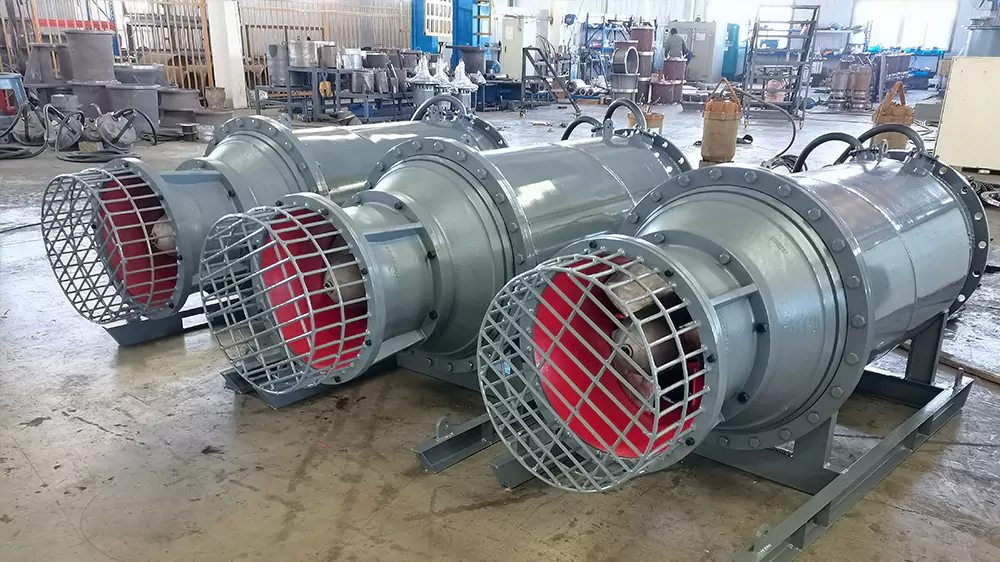
As a professional pump manufacturer and supplier in China, Kairun provides the Sled type Submersible Axial Flow Pump for demanding water transfer applications where high flow capacity, low head requirements, and simplified installation are essential. Designed with an integrated pump-and-motor structure and a sled-type base, this solution supports municipal drainage, flood control, agricultural irrigation, and water conservancy projects while helping reduce installation complexity and infrastructure costs.
A Sled type Submersible Axial Flow Pump is designed to move large volumes of water under relatively low-head conditions. Its submerged motor configuration and sled-type support structure make it suitable for projects where conventional pump installations require extensive civil engineering or complicated alignment procedures. This guide explains its working principle, key advantages, technical specifications, typical applications, and selection considerations. It also compares representative models to help engineers, contractors, procurement teams, and project owners identify equipment that matches their required flow rate, total head, power supply, and operating environment.
Table of Contents
- What Is a Sled Type Submersible Axial Flow Pump?
- How Does the Pump Work?
- What Are Its Main Advantages?
- What Technical Specifications Should Buyers Compare?
- Where Can This Pump Be Used?
- How Do You Select the Right Pump Model?
- What Installation and Maintenance Practices Matter Most?
- Frequently Asked Questions
- Conclusion: Choosing a Reliable Water Transfer Solution
1. What Is a Sled Type Submersible Axial Flow Pump?
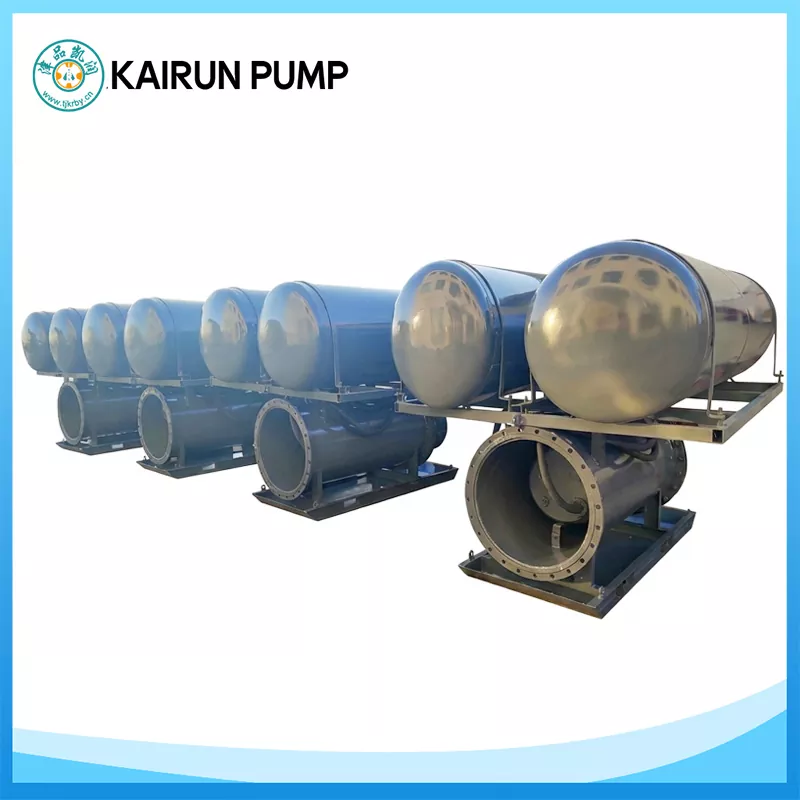
A Sled type Submersible Axial Flow Pump is a specialized pumping unit that combines axial-flow hydraulics, a submersible motor, and a sled-shaped support base. It is primarily intended for applications requiring substantial water movement without a high discharge head.
Unlike installations that depend on a dedicated pump shaft or a permanent, complex pump-house structure, the sled-type configuration offers a more flexible installation approach. Depending on the site layout and equipment design, the unit can be installed horizontally or at an inclined angle, subject to the manufacturer's installation requirements.
The integrated design is particularly useful for projects involving fluctuating water levels, limited construction space, temporary drainage needs, or the renovation of existing pumping facilities.
For engineers and purchasing teams, the most important consideration is that the pump is designed around a specific hydraulic duty. Its suitability depends on the required flow, total system head, water quality, submergence conditions, and electrical supply—not simply its nominal motor power.
2. How Does the Pump Work?
The working principle of an axial flow pump is based on transferring energy to water through a propeller-like impeller. As the impeller rotates, it generates flow primarily parallel to the pump shaft, allowing large quantities of liquid to move efficiently under relatively low-head conditions.
In a submersible configuration, the motor and pump operate underwater. The motor drives the impeller directly through an integrated arrangement, reducing the need for conventional external drive components. The sled-type base supports the unit and helps simplify positioning during installation.
The basic operating process includes the following stages:
- Water intake: Water enters the pump through the designed inlet passage.
- Energy transfer: The rotating impeller transfers mechanical energy to the liquid.
- Axial discharge: The impeller accelerates water along the shaft direction.
- Water conveyance: The discharge arrangement directs the flow toward the drainage channel, irrigation system, or other destination.
Because axial flow pumps prioritize flow capacity rather than exceptionally high pressure, they are especially suitable for low-lift water transfer. Correct hydraulic selection is essential: a pump operating outside its intended duty range may experience reduced efficiency, excessive vibration, or increased maintenance requirements.
3. What Are the Main Advantages of a Sled Type Submersible Axial Flow Pump?
3.1 Simplified Installation
The integrated structure and sled-type base can reduce the need for complicated foundation work and pump-shaft alignment. This is valuable for emergency drainage projects, temporary water transfer stations, and upgrades to existing infrastructure. Kairun's product information indicates potential civil engineering cost savings of 30%–40% compared with conventional pump-station arrangements. Actual savings depend on site conditions, installation scope, and the alternative design used for comparison.
3.2 High Flow Capacity at Low Head
Axial-flow hydraulics are well suited to moving large volumes of water over relatively small elevation differences. This makes the pump a practical candidate for flood discharge, farmland irrigation, river regulation, and industrial circulating-water systems.
3.3 Adaptability to Changing Water Levels
Rivers, lakes, reservoirs, and low-lying drainage areas often experience significant water-level fluctuations. A suitably configured submersible pump can operate within the specified submergence range without requiring the same arrangement as a conventional dry-installed pumping unit.
3.4 Protection for Submerged Operation
Kairun lists an IP68 protection rating, F-class insulation, double mechanical sealing, and protective functions for leakage, winding overtemperature, and overload or phase-loss conditions. These features can support reliable operation when correctly specified, installed, and maintained. Buyers should confirm the exact protection and monitoring package for their selected model.
3.5 Potential Energy and Operating Cost Benefits
Efficient hydraulic design and appropriate motor selection can help reduce energy consumption during continuous water transfer. Kairun reports energy savings of approximately 15% compared with conventional equipment. For a meaningful comparison, buyers should evaluate actual duty-point efficiency, annual operating hours, electricity tariffs, and the performance of the alternative pump.
4. What Technical Specifications Should Buyers Compare?
Before purchasing a Sled type Submersible Axial Flow Pump, engineers should compare the rated flow range, head range, motor power, supply voltage, and intended application. The following table summarizes representative models published by Kairun.
| Model | Flow Rate (m³/h) | Head (m) | Motor Power (kW) | Voltage (V) | Typical Application |
|---|---|---|---|---|---|
| 400QZB-50 (Sled Type) | 500–1,200 | 2–6 | 22–55 | 380 | Rural drainage and small-scale irrigation |
| 600QZB-120 (Sled Type) | 1,500–3,500 | 3–8 | 75–132 | 380 | Township drainage and medium-scale irrigation |
| 900QZB-280 (Sled Type) | 4,000–8,000 | 4–10 | 160–280 | 380/660 | Urban flood control and industrial circulation |
| 1200QZB-450 (Sled Type) | 8,000–15,000 | 5–10 | 315–450 | 660/1140 | Large-scale water regulation and emergency river drainage |
Important: These figures are published model ranges, not a guarantee that every combination of flow and head can be achieved simultaneously. The final operating point must be verified against the manufacturer's performance curve and the actual system requirements.
For further technical context, review Kairun's Sled type Submersible Axial Flow Pump product page and its broader submersible axial flow pump range.
5. Where Can This Pump Be Used?
The combination of high flow, low-head performance, and flexible installation makes this pump relevant to several water management sectors.
Municipal Drainage and Flood Control
Municipal authorities and drainage contractors can consider this pump for stormwater discharge, low-lying urban areas, riverside drainage stations, and emergency water removal. Rapid deployment may be particularly valuable when flood conditions demand a practical alternative to constructing a permanent pumping facility.
Agricultural Irrigation
Large farms and irrigation projects often need to transfer water from rivers, canals, reservoirs, or other sources to agricultural distribution systems. Selecting a suitable model can help match seasonal demand with the required water volume and available pumping head.
Water Conservancy and River Management
Water conservancy projects may use axial flow pumps for reservoir transfer, ecological water replenishment, river regulation, and temporary drainage during construction. The installation arrangement should account for changing water levels, sediment accumulation, inlet conditions, and access for servicing.
Industrial Water Circulation
Industrial parks and selected treatment facilities may require high-volume water circulation or rainwater lifting. The pump's suitability depends on the liquid's temperature, suspended solids, corrosiveness, and other operating characteristics. Applications involving chemically aggressive liquids or abrasive solids require specific material and hydraulic compatibility checks.
For additional background on the wider equipment category, see Kairun's article on submersible axial flow pumps for high-flow water transfer.
6. How Do You Select the Right Pump Model?
Choosing a pump based only on its maximum flow rate or motor power can result in unnecessary energy consumption or insufficient performance. A more reliable selection process starts with the hydraulic duty and operating environment.
- Determine the required flow rate: Calculate the normal, peak, and emergency water-transfer demand in cubic meters per hour.
- Calculate the total dynamic head: Include elevation differences, discharge pressure requirements, and losses through pipes, valves, bends, and other components.
- Assess the water conditions: Confirm temperature, sand content, suspended solids, and chemical characteristics. Kairun specifies a medium temperature of no more than 50°C and sand content of no more than 2% for the referenced product.
- Verify the electrical supply: Check voltage, frequency, available power, starting method, and protection requirements with the supplier.
- Evaluate installation conditions: Confirm water depth, inlet clearance, base support, discharge arrangement, cable routing, and maintenance access.
- Review lifecycle costs: Compare energy consumption, expected operating hours, maintenance intervals, spare parts, and installation expenses.
- Request performance documentation: Ask for the pump curve, efficiency data, dimensional drawings, applicable protection details, and recommended operating limits.
A well-matched pump should satisfy the project's required duty point while remaining within the manufacturer's recommended operating range. For projects with variable water levels or changing seasonal demand, engineers should also determine whether variable-frequency control is appropriate.
7. What Installation and Maintenance Practices Matter Most?
Correct installation and routine inspection are essential to protecting submerged pumping equipment. Even a well-designed unit can suffer premature wear if the inlet is obstructed, the electrical system is improperly installed, or the pump operates outside its specified limits.
Installation Checklist
- Secure the sled-type base according to the approved installation drawings and site conditions.
- Maintain the required clearance between the pump inlet and the bottom sediment layer. Kairun recommends at least 0.5 meters for the referenced product, subject to project-specific requirements.
- Route and protect power cables against abrasion, crushing, and sharp edges, and ensure all electrical connections are properly sealed.
- Verify the specified installation angle, submergence depth, inlet flow conditions, and discharge configuration.
- Before commissioning, check electrical connections, protection devices, impeller freedom of movement, and rotation direction using the manufacturer's approved procedure.
Routine Maintenance Checklist
- Monitor operating current, voltage, noise, vibration, and water-discharge performance.
- Stop the equipment if abnormal vibration, unusual noise, overheating, or unexpected current changes occur.
- Inspect the mechanical seals, cable insulation, and protective monitoring functions at the intervals specified by the manufacturer.
- Remove accumulated debris and inspect the impeller when required by operating conditions.
- Avoid dry running and operation beyond the specified water-temperature or sand-content limits.
- Before extended shutdown, isolate the power supply and follow the approved cleaning, inspection, storage, and restart procedures.
Maintenance intervals should be adjusted according to operating hours, water quality, seasonal use, and manufacturer guidance. Electrical isolation and appropriate safety procedures must be followed before inspection or servicing.
8. Frequently Asked Questions
Q1: What is the main purpose of a Sled type Submersible Axial Flow Pump?
Its primary purpose is to transfer large volumes of water at relatively low head. Common applications include flood control, municipal drainage, agricultural irrigation, river management, and industrial water circulation.
Q2: How much water can a Kairun sled-type pump handle?
The representative models listed on Kairun's product page cover flow ranges from 500 to 15,000 m³/h. The required flow rate and head must be checked against the performance curve of the selected model before purchase.
Q3: Does a sled-type design eliminate the need for civil engineering?
It can reduce the need for extensive civil works compared with certain conventional pump-station arrangements. However, site preparation, base support, anchoring, discharge connections, electrical infrastructure, and other installation requirements may still apply.
Q4: Can the pump operate in wastewater?
It may be suitable for light sewage or similar media within the specified operating limits. Buyers should confirm the allowable solids, sand content, temperature, impeller configuration, and material compatibility before using it in wastewater applications.
Q5: What information should I provide when requesting a quotation?
Provide the required flow rate, total head, water characteristics, operating water levels, supply voltage and frequency, installation conditions, duty cycle, and project location. Drawings, photographs, or existing pump data can also help the supplier assess the application.
Q6: Can the pump be used for emergency flood drainage?
Yes, a properly selected and configured unit can be considered for emergency drainage. Project teams should verify deployment time, available power, discharge routing, water depth, and the actual hydraulic capacity required under peak flood conditions.
9. Conclusion: Choosing a Reliable Water Transfer Solution
A Sled type Submersible Axial Flow Pump is a practical option for water management projects that demand high flow, relatively low head, and a flexible installation arrangement. Its integrated design can simplify deployment, while appropriate hydraulic selection, electrical protection, and preventive maintenance help support reliable operation over the equipment's service life.
For municipalities, irrigation contractors, industrial operators, and water conservancy project teams, the best purchasing decision starts with accurate operating data and a clear understanding of site constraints. Kairun offers representative sled-type models for different flow requirements, from rural drainage to large-scale water regulation. If you are comparing pump capacities or planning a new installation, contact us to discuss your required flow rate, total head, operating conditions, and project specifications. Our team can help you evaluate a suitable model and request the technical information needed for your application.
Previous :
-
Related News
- Sluice Gate Axial Flow Pumps Gain Attention as Cities Upgrade Flood Control and Drainage Systems
- What Makes Tubular Pump Selection So Critical for High-Flow Water Projects?
- What Makes Vertical Axial Flow Pump the Right Choice for High-Flow Water Projects?
- How Can a Motor Control Center Solve Pump System Downtime and Energy Waste?
- How Can Water Pump Control Valve Prevent Costly Pump System Failures?
- How Can Water Pump Accessories Reduce Pump Downtime?
Leave me a message
News Recommendations